 Mon, 20 Jul 2026
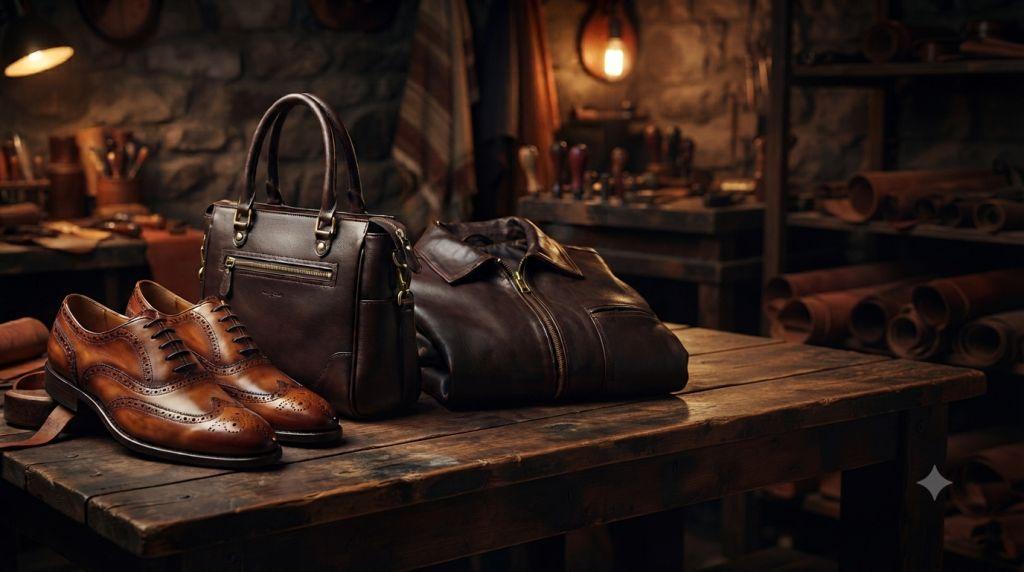
India's Leather Export Industry: Shoes, Bags & Garments


India's leather and footwear exports grew 25% in a single year, reaching $5.7 billion in FY25. The Council for Leather Exports (CLE) projects that number will cross $6.5 billion in FY26, and the sector's long-term target is $13.7 billion in exports by 2030 as part of a $39 billion total turnover vision.
Twenty-five percent growth in a year is not a normal outcome. Most mature export sectors move in the 5-10% range. What drove it in leather was a combination of factors: organized investment flowing into export-oriented manufacturing clusters, competitive pricing relative to China and Vietnam as buyers diversified supply chains, and strong demand from the US and UK - India's two largest leather product markets - that showed no signs of softening despite broader global trade uncertainty.
India's leather industry employs approximately 4.2 million people directly - and this number matters beyond the headline, because it signals the depth of the manufacturing base behind these export figures. Leather is not a sector India is building toward. It is one that has been embedded in several regional economies for generations. Kanpur, Agra, Chennai, Kolkata's Bantala complex, and Ambur in Tamil Nadu together represent decades of craft knowledge, processing infrastructure, and buyer relationships that competitors cannot rapidly replicate.
This guide covers the full picture: what gets exported, where it comes from, who buys it, what the compliance requirements actually are, and what the 2025 US tariff situation means for the sector going forward.
The Sector Snapshot
| Metric | Data |
|---|---|
| Total leather + footwear exports FY25 | $5.7 billion (+25% YoY) |
| FY26 projection (CLE) | $6.5 billion |
| 2030 export target | $13.7 billion |
| Total industry turnover target 2030 | $39 billion |
| Employment | 4.2 million people |
| Footwear share of total leather exports | 48.5% (FY26 Q1: $823M) |
| Top export destination | USA (21.56% share, $259.47M in Q1 FY26) |
| 2nd and 3rd export destinations | Germany (11.38%), UK (9.03%) |
| Export countries covered | 50+ countries |
| FY26 Q1 (Apr-Jun) total leather exports | $947.46 million (top 15 countries = 78.72%) |
Sources: CLE / IBEF Leather Industry Report (FY26 Q1 data), DD News / Fibre2Fashion (FY25 $5.7B figure), Indian Leather Industry Exports portal
The FY25 25% jump is the headline, but the FY26 Q1 data is the confirmation that momentum held. $947.46 million in a single quarter from the top 15 buying countries - annualized, that runs well ahead of even the $6.5 billion FY26 projection. The sector is outperforming its own targets.
One notable point in the IBEF data: the US continues to grow despite tariff headwinds. During Q1 FY26, US imports from India rose 7.96% year-on-year even after the tariff increases. That resilience reflects something specific: the US does not have a domestic alternative for the volume and price point that Indian leather products offer. The CLE has explicitly requested a "zero-for-zero" duty arrangement in the India-US bilateral trade agreement currently under negotiation - meaning Indian leather enters the US duty-free and vice versa. That would be transformational if achieved.
What India Exports: The Product Categories
1. Footwear - The Dominant Category at 48.5%
Footwear - leather footwear and footwear components - is nearly half of India's total leather export value. Within this:
Leather dress and casual shoes - The broadest and highest-volume sub-category. Agra is the largest footwear manufacturing cluster in India, specializing in leather shoes across a wide price range. Chennai's clusters (particularly Ambur in Tamil Nadu) are also significant producers with strong export orientation.
Industrial and safety footwear - A growing export segment. Steel-toed safety boots and industrial footwear for construction, mining, and manufacturing buyers globally. European buyers in Germany and the Netherlands specify EN ISO safety standards; US buyers specify ASTM F2413.
Women's fashion footwear - Higher design intensity, seasonal variation, and faster product development cycles. Delhi NCR has some manufacturers in this space. The premium women's shoe segment commands significantly higher price points than commodity footwear.
Children's footwear - Specific compliance considerations apply (no chrome VI, CPSC requirements for US). Export volumes are meaningful but require careful attention to restricted substance requirements.
Leather footwear components - Uppers, soles, insoles, shoe lasts, and component parts exported to footwear manufacturers in other countries (particularly in Southeast Asia and Europe) who assemble finished shoes. This is a distinct export category from finished footwear.
Non-leather footwear - The sector's fastest-growing export sub-segment by some measures. Athletic, casual, and fashion footwear in synthetic, textile, and mixed materials. Reflects broader global market shift toward non-leather options and the growth of India's technical footwear manufacturing.
2. Leather Goods - Bags, Wallets, and Accessories
Leather goods - handbags, wallets, belts, small leather goods, travel goods - form the second major export category. India produces leather goods across a wide quality spectrum, from mid-market to genuinely premium.
Handbags and purses - India's leather bag export has grown significantly. Manufacturers in Kolkata's Bantala leather complex and in Tamil Nadu produce bags for both branded international buyers and private-label markets. The global handbag import market is large and premium-tier buyers specifically seek Indian leather goods for design flexibility, skilled finishing, and competitive pricing relative to European alternatives.
Small leather goods - Wallets, cardholders, key fobs, belts. High volume, relatively standardized products. Kanpur and Delhi NCR manufacturers produce in this category at scale.
Travel goods and luggage - Suitcases, travel bags, and accessories. India produces for both direct export and for branded buyers sourcing under their own labels.
Leather accessories - Belts, watch straps, key chains, phone cases. Lower unit value but consistent volume.
Corporate gifting and promotional leather goods - A specific B2B segment where Indian manufacturers supply branded gifts to multinational companies. Customized portfolios, folders, and branded small leather goods are a consistent export category particularly to the UAE and UK.
3. Leather Garments
Leather garments - jackets, coats, trousers, gloves - are India's third significant export category. This is the most craft-intensive and premium-positioning sub-segment.
Leather jackets and coats - Delhi NCR, particularly the clusters around Rajouri Garden and Kirti Nagar, has been a significant leather garment manufacturing area. Manufacturers produce for European fashion brands under OEM arrangements.
Leather gloves - India exports driving gloves, fashion gloves, and work gloves. European buyers are the primary market.
Leather garment accessories - Belts, garters, and leather components integrated into apparel.
The leather garment sector requires the highest design capability and the most specific compliance with EU REACH regulations (particularly for chromium VI content in finished leather), making it the most demanding segment for new exporters to enter.
4. Finished Leather (Crust and Finished Leather)
This category is sometimes overlooked in export discussions but is significant: India exports finished leather - tanned, dyed, and finished hides - to leather goods manufacturers in other countries. Italy, Germany, China, and Hong Kong are buyers of Indian finished leather, which they then use in their own manufacturing.
India has extensive tanning infrastructure, particularly in Kanpur (buffalo leather), Tamil Nadu (goat and sheep), and West Bengal. Tanning quality varies considerably across these clusters.
Manufacturing Clusters: Where India's Leather Comes From
Kanpur, Uttar Pradesh - India's Leather City Kanpur has the largest concentration of tanneries in India, primarily processing buffalo leather. The city's tanneries supply finished leather to manufacturers across India and export directly. Leather goods, belts, and industrial products are the primary finished goods from this cluster. Kanpur's buffalo leather is a specific material identity - the density and texture of buffalo hide has specific applications in footwear and heavy goods manufacturing.
Agra, Uttar Pradesh - Footwear Capital Agra is India's largest footwear manufacturing city, with over 5,000 footwear manufacturing units. Known primarily for formal leather shoes. A large share of India's finished leather shoe export originates from Agra manufacturers. The cluster has both large organized manufacturers and thousands of small workshop-scale operations.
Ambur, Tamil Nadu Ambur processes predominantly goat and sheep skins and is a major export-oriented leather processing and footwear cluster. The Tamil Nadu leather cluster (Ambur, Vaniyambadi, Ranipet) has more LWG (Leather Working Group) certified tanneries than most other Indian clusters - relevant for buyers who require sustainability-certified leather supply chains.
Chennai, Tamil Nadu In addition to the broader Tamil Nadu processing cluster, Chennai has finished goods manufacturers - bags, garments, and accessories - serving European and US export markets.
Kolkata and Bantala, West Bengal The Bantala Leather Complex outside Kolkata houses approximately 500 tanning and finished goods units. Kolkata has historically served as a leather goods hub with strong UK buyer relationships dating from the colonial-era trading relationship. Leather garments and small leather goods are strong categories here.
Delhi NCR (Faridabad, Ghaziabad, Noida) Leather garments and fashion leather goods. Proximity to Delhi's export logistics infrastructure and design capability makes NCR a center for fashion-forward leather garment manufacturing.
Hyderabad, Telangana Some leather goods and footwear manufacturing, growing in organized sector manufacturing.
Top Destination Markets and What Each Wants
United States - 21.56% of exports, $259.47M in Q1 FY26 The largest single buyer. US imports of Indian leather products grew 7.96% year-on-year in Q1 FY26 despite tariff headwinds - that resilience tells you something about the depth of US buyer dependence on Indian supply. The US market spans multiple product segments: fashion leather goods and handbags through specialty retail and department stores, footwear through mid-market retail, and safety footwear through industrial distributors. CLE's "zero-for-zero" duty proposal in the India-US trade agreement would be the single most significant policy change for this market.
Germany - 11.38%, $136.93M in Q1 FY26 German buyers are the most demanding in Europe - for tannery certification (LWG), for chemical compliance (REACH, particularly Chrome VI restrictions), and for consistency of product across large orders. German luxury and premium fashion brands source from Indian leather manufacturers who have achieved the required certification levels. The German market rewards quality and compliance investment with long-term buying relationships and better margins than commodity markets.
United Kingdom - 9.03%, $108.65M in Q1 FY26 The UK's large South Asian diaspora and its mainstream leather goods market both contribute. India-UK FTA recently signed should improve tariff terms. UK buyers want LWG certification increasingly as standard, and post-Brexit compliance requirements mean separate documentation from EU requirements.
France, Spain, Italy EU fashion markets where Indian leather goods and garments supply both direct retail and luxury brand sub-assembly. Italian buyers in particular source finished leather from India for use in Italian-manufactured goods - the "Made in Italy" supply chain has more Indian input than most people realize. French luxury houses source components and some finished goods from certified Indian manufacturers.
UAE Regional hub buying for re-export across the Middle East. India-UAE CEPA provides preferential access. Strong demand for leather goods and accessories driven by the UAE's luxury retail sector and large South Asian expatriate population.
Australia Growing market with India-Australia CEPA preferential access. Australian leather goods buyers have been exploring India as an alternative to Chinese supply.
Compliance: What International Buyers Require
Leather Working Group (LWG) Certification - The Sustainability Standard Buyers Now Expect
The Leather Working Group is the most important certification in the global leather industry for sustainability and environmental performance. LWG audits tanneries against a scorecard covering environmental compliance, chemical management, water usage, solid waste management, and energy consumption.
India's Tamil Nadu cluster has the highest concentration of LWG-certified tanneries in India, which is one reason why Tamil Nadu has become the preferred sourcing region for European brands with LWG requirements. Kanpur's tanneries have historically had lower LWG certification rates due to environmental compliance challenges - this is an honest industry reality, not a criticism.
LWG certification is becoming the baseline for:
- European luxury and premium brand buyers
- US retailers with stated sustainability commitments
- UK retail chains
- Any brand that has made public ESG commitments around leather sourcing
For new Indian leather exporters targeting premium markets: LWG certification of your tannery supplier is increasingly a qualification requirement, not a differentiator. Start the supplier qualification process by checking the LWG public certificate directory.
→ LWG Public Certificate Directory
REACH Regulation - The EU's Chemical Safety Framework
REACH (Registration, Evaluation, Authorisation and Restriction of Chemicals) is the EU's comprehensive chemical regulation. For leather goods:
Chrome VI (hexavalent chromium) - EU Regulation 301/2014 limits Chrome VI in leather articles intended to come into prolonged contact with human skin (footwear, gloves, watchstraps, garments) to 3mg/kg. Chrome VI can form from Chrome III during tanning, particularly in poorly managed chrome tanning processes. Finished leather must be tested for Chrome VI content. This is where Kanpur tanneries have historically faced challenges - poorly managed chrome tanning creates Chrome VI risk. LWG-certified tanneries have chemical management protocols specifically addressing this.
Azo dyes - Certain azo dyes that can release aromatic amines are restricted under REACH. Leather dyed with restricted azo compounds cannot be sold in the EU. Your dye supplier must confirm compliance.
Biocides - Leather preservatives and mold inhibitors must comply with the Biocidal Products Regulation (BPR).
For EU market compliance: test your finished leather products for Chrome VI and restricted azo dyes from an accredited third-party laboratory (TÜV, SGS, Intertek, Bureau Veritas all offer these tests in India) before each shipment. Maintain test certificates per batch.
CPSC Requirements - US Market Safety
The US Consumer Product Safety Commission regulates safety of consumer products. For leather footwear and goods:
Children's products - Children's footwear, accessories, and goods are subject to strict CPSC requirements including lead content limits (<100ppm total, <90ppm accessible) and phthalate restrictions. A Children's Product Certificate (CPC) from an accredited third-party lab is mandatory.
Prop 65 (California) - As with all consumer goods sold in California, leather products must carry appropriate warnings if they contain substances on the Prop 65 list (lead in dyes, certain biocides) above threshold levels. US buyers selling in California will pass this obligation to Indian suppliers.
ASTM F2413 - For safety footwear (steel-toed, protective) exported to the US. US industrial buyers specify ASTM F2413 compliance for protective footwear.
EU EN ISO Standards - Footwear Safety
For safety footwear sold in Europe: EN ISO 20345 (safety footwear with protective toe cap) or EN ISO 20347 (occupational footwear). Compliance requires testing by an accredited European notified body or recognized test house, followed by CE marking and declaration of conformity.
BIS Certification - Indian Standards
For leather products sold in India (and useful baseline for export credibility), BIS certification against IS standards is the domestic baseline. IS 1989 for leather footwear, for example.
What Competitor Guides Get Wrong
They avoid the Chrome VI and Kanpur tannery reality. The Chrome VI compliance issue with some Indian leather - particularly from poorly managed chrome tanning facilities - is documented and known in the global leather trade. EU shipments have been rejected for Chrome VI violations. This is not a reason to avoid Indian leather; it is a reason to source from LWG-certified tanneries that have chemical management protocols, particularly for EU-bound product. Guides that do not mention this are incomplete.
They ignore the LWG certification gap between clusters. Tamil Nadu's tanneries have significantly higher LWG certification rates than Kanpur's. For premium European buyers, this matters enormously - they are choosing suppliers partly on tannery certification. A guide that treats "Indian leather" as homogeneous misrepresents the actual sourcing decision a European buyer faces.
They skip the zero-for-zero trade deal significance. CLE's request for zero-for-zero duty treatment in the India-US trade agreement is not a background detail. The current MFN tariff on Indian leather goods entering the US is 3-10% depending on product category. Zero-for-zero would remove that entirely, materially changing the competitive position of Indian leather relative to Chinese and Vietnamese alternatives. Any guide on Indian leather export that does not flag this pending trade development is missing the most important near-term policy change for the sector.
Government Support for Leather Exporters
IFLDP (Indian Footwear and Leather Development Program) The government's primary investment scheme for the leather sector. Rs 1,700 crore ($220 million) allocated under six sub-schemes through 2026:
- STEP (Sustainable Technology and Environment Protection) - environmental and tannery upgrade support
- IDLS (Integrated Development of Leather Sector) - new unit setup and diversification incentives
- Infrastructure development, technology upgradation, branding, and training
Focus Product Scheme (Union Budget 2025-26) The government introduced a Focus Product Scheme specifically targeting footwear and leather in Budget 2025-26, with targets of Rs 4 lakh crore ($46 billion) in turnover, Rs 1.1 lakh crore ($12.74 billion) in exports, and 2.2 million additional jobs. A Rs 2,600 crore ($301 million) PLI scheme for the sector is under discussion.
CLE (Council for Leather Exports) The primary export promotion body. Organizes buyer-seller meets globally, trade fair participation (LINEAPELLE in Milan, Magic Las Vegas, Global Sources in Hong Kong), and maintains India's leather export data and market intelligence. CLE RCMC is the standard registration for leather exporters. → CLE Official
RoDTEP Scheme Remission of Duties and Taxes on Exported Products applies to leather exports. Specific rebate rates vary by HS code - confirm your product's applicable rate before pricing export orders.
EPCG Scheme Allows duty-free import of capital goods (machinery, testing equipment) used in export manufacturing in exchange for export obligations. Relevant for manufacturers investing in new stitching, finishing, or quality testing equipment.
How to Start Exporting Leather Products from India
Step 1: IEC from DGFT - Rs 500, online, mandatory starting point.
Step 2: CLE RCMC - Registration with the Council for Leather Exports unlocks MDA grants for trade fair participation, buyer-seller meet access, and market intelligence reports.
Step 3: GST registration - Standard.
Step 4: Identify your HS code precisely - Leather products span multiple chapters: 4102-4115 (raw hides and leather), 6403 (leather footwear), 4202 (handbags and travel goods), 4203 (leather garments and accessories). The 8-digit code determines import duty in destination countries and RoDTEP rebate.
Step 5: Tannery compliance audit - If you are manufacturing leather goods (rather than just trading), verify your leather supply comes from an LWG-certified tannery if targeting EU or premium markets. Check the LWG public directory.
Step 6: Chrome VI and Azo dye testing - Before any EU-bound shipment, test your finished leather for Chrome VI content and restricted azo dyes from an accredited lab. This is a per-batch process, not a one-time certification.
Step 7: CPSC / Prop 65 compliance - For US-bound children's products specifically; for adult products, review against Prop 65 substance list.
Step 8: Trade show participation - LINEAPELLE (Milan, biennial - September/February) is the world's most important leather goods trade show for European buyers. Magic (Las Vegas) for US buyers. CLE's IILF (India International Leather Fair) in Chennai for domestic B2B connections and international buyers visiting India.
Pre-Export Checklist
- IEC from DGFT
- CLE RCMC
- GST registration
- HS code confirmed at 8-digit level
- RoDTEP rate confirmed for your product code
- LWG certificate of tannery supplier confirmed (for EU/UK/premium US buyers)
- Chrome VI test completed on finished leather batch (required for EU)
- Azo dye test completed (required for EU)
- Children's product CPC if exporting any items for children to the US
- Prop 65 review if US distribution includes California
- Safety footwear: CE marking and ASTM F2413 testing confirmation if applicable
- Certificate of origin confirmed (required for FTA benefit claims - India-UAE CEPA, India-Australia CEPA, India-UK FTA)
- Leather test reports filed and accessible - EU buyers routinely request these at any point in the buyer relationship
Findout Leather Products : Leather Saddlery & Harness | Raw Hides & Skins | Leather Upholstery | Leather Travel Goods | Leather Diaries & Stationer | Leather Jackets & Garments
Leather Alternative Products
Related Navi Exports Categories
- Leather & Leather Products Exporters
- Shoes, Shoe Parts & Accessories
- Fashion Accessories
- Apparel & Accessories
- Bags, Boxes, Cases & Luggage
The Bottom Line
India's leather export sector grew 25% in FY25. Footwear alone contributes 48.5% of total leather exports. The US, Germany, and UK together account for over 40% of total export value. The CLE is projecting $6.5 billion in FY26 and the sector targets $13.7 billion in exports by 2030.
The compliance picture is real and has nuance. Tamil Nadu's tanneries are better positioned for European premium markets - higher LWG certification rates, stronger chemical management - than some Kanpur operations. Chrome VI compliance is a specific, testable requirement that cannot be assumed from tannery reputation alone. The EU's REACH restrictions require per-batch testing, not a one-time certificate.
The US tariff situation created some pricing friction but no order cancellations - CLE confirmed this explicitly. The underlying demand is structurally driven by a US market that has no domestic leather manufacturing alternative and no other Asian supplier with the combination of price, quality, and production capacity that India offers. Zero-for-zero tariff treatment, if achieved in the ongoing trade agreement negotiations, would accelerate the sector significantly.
For international buyers, India's leather industry offers: world-class footwear manufacturing from Agra and Tamil Nadu clusters, leather goods manufacturing from Kolkata and Delhi NCR with established European buyer relationships, and an improving sustainability certification track record as LWG adoption grows. For new exporters, the compliance investment — LWG supplier verification, chemical testing, CLE registration - is the entry fee to markets that pay premium prices and maintain long-term supplier relationships.
→ Browse verified Indian leather exporters on Navi Exports
Data sources: IBEF Leather Industry India Report (FY26 Q1 data: $947.46M, USA 21.56%, Germany 11.38%, UK 9.03%, footwear 48.5%), CLE / DD News / Fibre2Fashion FY25 $5.7B data and FY26 $6.5B projection (April 2025), Indian Trade Portal IFLDP scheme details, Leather LSSC Blog "Leather Footwear Exports Jump 25%" (August 2025), LWG (Leather Working Group) public certificate directory, EU REACH Regulation 301/2014 (Chrome VI limits for leather), CPSC Children's Product Certificate requirements.
Frequently Asked Questions
India's leather, footwear, and leather products exports reached $5.7 billion in FY2024-25, a 25% increase year-on-year. The Council for Leather Exports (CLE) projects exports to cross $6.5 billion in FY26. The sector's long-term target is $13.7 billion in exports by 2030 as part of a $39 billion total industry turnover vision. Footwear accounts for 48.5% of total leather exports.
The USA is the largest buyer at 21.56% share ($259.47 million in Q1 FY26), followed by Germany at 11.38% ($136.93 million) and the UK at 9.03% ($108.65 million). Italy, France, Spain, Netherlands, UAE, Belgium, Australia, China, and Canada are among the other significant buyers. India exports leather products to over 50 countries, with the top 15 accounting for 78.72% of total exports.
The Leather Working Group (LWG) is an international certification body that audits tanneries for environmental performance, chemical management, water and energy usage, and sustainability practices. LWG certification is becoming a baseline requirement for EU luxury and premium brand buyers, UK retailers, and US companies with sustainability commitments. India's Tamil Nadu cluster has the highest concentration of LWG-certified tanneries. Check the LWG public certificate directory before selecting a tannery supplier for EU-bound products.
Chrome VI (hexavalent chromium) is a toxic form of chromium that can form from Chrome III during leather tanning if the process is not well managed. EU Regulation 301/2014 limits Chrome VI in leather articles intended for prolonged skin contact to 3mg/kg. Leather goods exceeding this limit cannot be sold in the EU. Third-party testing from an accredited laboratory (per batch) is required to verify compliance. Chrome VI risk is higher in poorly managed chrome tanning facilities — LWG-certified tanneries have chemical management protocols addressing this.
The Indian Footwear and Leather Development Program (IFLDP) has allocated Rs 1,700 crore ($220 million) through 2026 across six sub-schemes covering environmental upgrades (STEP), integrated development (IDLS), infrastructure, technology, branding, and training. Budget 2025-26 introduced a Focus Product Scheme targeting leather and footwear with ambitious turnover and employment targets. A Rs 2,600 crore ($301 million) PLI scheme for the sector is under discussion. CLE manages the RCMC registration and trade promotion. RoDTEP provides export rebates on embedded taxes.
CLE (Council for Leather Exports) has formally requested "zero-for-zero" duty treatment in India's ongoing bilateral trade agreement negotiations with the United States - meaning Indian leather goods would enter the US duty-free, and US goods would enter India duty-free. Currently, Indian leather products face MFN tariffs of 3-10% in the US depending on product category. Zero-for-zero would remove that entirely, materially improving the competitive position of Indian leather relative to Chinese and Vietnamese alternatives. This is not yet agreed - it is a pending negotiation point worth monitoring.