-
-
-
Sustainable Fashion Exports from India: The Growing Global Trend
 Sat, 01 Aug 2026
Sustainable Fashion Exports from India: The Growing Global Trend


GOTS, the certification body every organic cotton buyer trusts to separate real organic fiber from marketing spin, found roughly 20,000 metric tonnes of Indian cotton that had been certified organic using fake transaction certificates, cloned government websites, and shipping companies that never existed at all. That happened in 2020, and the fallout is still shaping how serious buyers verify Indian organic cotton suppliers today.
This is not the opening most sustainable fashion articles would choose. Most of them lead with EU consumer demand and a list of eco-friendly fabrics. But if you are sourcing sustainable fashion from India rather than just reading about the trend, the certification fraud history is exactly the kind of thing you need to know before you order, not after. This guide covers what is genuinely driving demand, which clusters produce what, and the verification and compliance steps that separate a real sustainable supplier from a certificate that looks real on paper.
This piece covers finished sustainable garments and textile products. Organic cotton yarn and recycled fiber as raw inputs are covered separately in our Yarn & Fiber Exports guide, and sustainable jewelry, scarves, and other accessories are covered in Fashion Accessories Export from India.
The Numbers
| Metric | Data |
|---|---|
| India's textile and apparel exports, FY26 | Rs 3.25 lakh crore |
| Handloom exports, FY24 | Rs 1,146 crore |
| Handloom sector workforce | 35.22 lakh workers, 72% women |
| Handloom looms in operation | 2.8 million |
| Share of world's handwoven cloth produced in India | Around 95% |
| Global handloom market size, 2026 | Around $9.7 billion, projected to reach $18.1 billion by 2033 |
| Fraudulent organic cotton identified by GOTS, 2020 investigation | Roughly 20,000 metric tonnes |
| GOTS premium over conventional cotton yarn pricing, 2026 | 20% to 40% |
| RoSCTL scheme extension | Through September 2026 |
That RoSCTL extension matters more than it might look. Export incentive schemes for handloom and apparel get renewed on tight timelines, and a scheme lapsing even briefly can disrupt pricing for exporters mid-contract. Anyone building a long-term sourcing relationship in this category should track scheme renewal dates as closely as they track fabric certifications.
What Is Actually Being Exported
Organic Cotton Apparel
India is the largest global source of organic cotton, and GOTS-certified garments, from basic T-shirts to children's wear, are the largest sustainable fashion export category by volume. Buyers should understand that "organic" is not a legally protected term in most markets. A garment can carry an organic claim on the label with zero third-party verification. GOTS certification, checked directly against the GOTS database rather than taken on trust from a supplier's paperwork, is the real safeguard.
Handloom Textiles
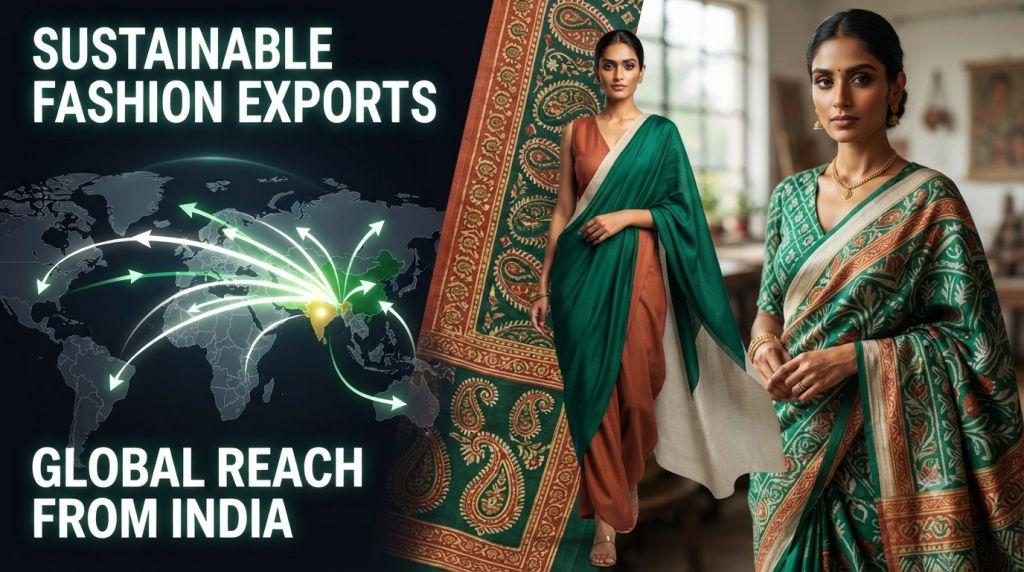
Hand-woven sarees, dupattas, bedsheets, cushion covers, and home textiles produced without industrial power looms. India produces close to 95% of the world's handwoven cloth, and the sector directly and indirectly employs 35.22 lakh workers, 72% of them women, across 2.8 million looms. Home textiles alone make up over 60% of India's total handloom exports. The USA is the top importer of Indian handloom products, followed by the UAE.
Recycled and Upcycled Fashion
Garments made from recycled cotton, recycled polyester, or repurposed textile waste, much of it sourced from the same Panipat recycling ecosystem covered in our yarn and fiber guide. This category is growing fastest in the EU specifically because new EU rules increasingly reward recycled content with regulatory credit, not just marketing appeal.
Natural Dye and Low-Impact Processing
A smaller but genuinely differentiated niche: garments dyed using natural indigo, madua, and other plant-based dyes instead of synthetic azo dyes, appealing to buyers specifically avoiding the chemical-intensive dyeing processes GOTS and OEKO-TEX were built to police.
Why Demand Is Actually Rising
EU regulation is turning "sustainable" from a marketing claim into a legal requirement
The EU's Ecodesign for Sustainable Products Regulation already banned large companies from destroying unsold apparel, clothing accessories, and footwear. Digital Product Passports for textiles, which will require documented fiber composition, origin, and recyclability data at the product level, are expected to phase in between 2026 and 2030 under the broader EU Strategy for Sustainable and Circular Textiles. Extended Producer Responsibility schemes for textile waste are also rolling out across EU member states. None of this is optional for brands selling into the EU, regardless of where the garment was manufactured. A brand headquartered in the EU carries compliance responsibility even when production happens entirely in India.
US buyers are demand-driven, not regulation-driven, but the demand is real
Unlike the EU, the US has no equivalent binding sustainability mandate yet. What it has is consumer demand, particularly for organic cotton basics, and a growing number of DTC and mid-market brands building entire product lines around GOTS-certified sourcing.
Handloom is riding the anti-fast-fashion wave
The handloom sector's genuinely low environmental footprint, minimal power usage, decentralized household-level production, has become its strongest selling point precisely as fast fashion draws more criticism. This is one case where a traditional craft sector's inherent characteristics happen to align with a current buyer trend, rather than needing to be repositioned to fit it.
Recycled content is gaining regulatory teeth in Europe
As EU rules push toward mandatory recycled-fiber content disclosure, suppliers who can document genuine recycled content, not just claim it, have a real pricing and access advantage heading into the 2026-2030 rollout window.
The Compliance Picture: What Buyers Actually Need to Verify
GOTS certification, verified directly, not taken on trust
Always check a supplier's Scope Certificate against the official GOTS database, and request the specific Transaction Certificate for the exact lot being purchased rather than a general certificate. The 2020 fraud case involved forged Transaction Certificates using cloned government website QR codes, and GOTS has since tightened its own verification of incoming raw material TCs specifically because of this. A cheap price on a "certified" organic order is not a reason for confidence. It is a reason to check the certificate yourself before you pay.
OEKO-TEX Standard 100
Tests the finished garment for harmful substances and is increasingly requested alongside GOTS rather than as a substitute for it, since OEKO-TEX and GOTS cover different parts of the supply chain.
GRS (Global Recycled Standard)
The certification that matters most for recycled and upcycled fashion claims. Validates real recycled content percentage rather than a vague "eco-friendly" label.
India Handloom Brand and Handloom Mark
Government-backed quality marks specific to genuine handwoven products. The Handloom Mark alone has issued over 22,000 registrations, giving buyers a way to confirm a product is actually hand-loomed rather than power-loomed and marketed as artisanal.
EU Digital Product Passport and ESPR readiness
Not yet mandatory for most textile categories, but the direction is set and buyers selling into the EU should be building product-level documentation, fiber composition, country of manufacture, certification records, now rather than waiting for the final delegated act. Suppliers who already track this data at the product level will be far easier to work with once the requirement lands.
Government Support
National Handloom Development Programme (NHDP)
Running through 2025-26, supports weaver skill upgradation, cluster development, and marketing assistance, with mega clusters eligible for financial assistance up to Rs 30 crore.
Raw Material Supply Scheme (RMSS)
Provides subsidized yarn to handloom weavers, including a 15% price subsidy and freight reimbursement, addressing one of the sector's persistent input-cost problems.
Market Access Initiative (MAI)
Runs through March 2026, funding trade fair participation, market studies, and compliance support specifically for smaller and traditional export segments like handloom.
RoSCTL (Rebate of State and Central Taxes and Levies)
Extended through September 2026, offsetting embedded state and central taxes for apparel and made-up exporters, handloom included.
Handloom Export Promotion Council (HEPC)
Established in 1965 under the Ministry of Textiles, provides trade facilitation specifically for handloom exporters, distinct from the broader apparel export promotion bodies.
How to Source or Export Sustainable Fashion from India
Step 1: Decide which sustainability claim you actually need
Organic fiber content, hand-woven authenticity, and recycled content are verified by entirely different certifications. Know which one your buyer or market actually requires before sourcing.
Step 2: Verify certificates independently
For GOTS, check the Scope Certificate against the official database and request lot-specific Transaction Certificates. Do not rely solely on a supplier-provided PDF.
Step 3: Confirm HS classification and export registrations
Standard IEC from DGFT applies. Handloom exporters typically also register with the Handloom Export Promotion Council for sector-specific trade facilitation.
Step 4: Build EU compliance documentation early if targeting European buyers
Fiber composition, origin, and certification data at the product level, even before Digital Product Passport requirements become mandatory for your specific category.
Step 5: Match your product to the right buyer segment
Organic cotton basics toward US and EU DTC brands, handloom textiles toward buyers seeking authentic artisanal product with home-textile and apparel applications, recycled fashion specifically toward EU buyers who benefit from documented recycled content under emerging EU rules.
Pre-Export Checklist
- IEC from DGFT
- Sector-specific export council registration (HEPC for handloom, TEXPROCIL for cotton-based apparel)
- GST registration in place
- GOTS Scope Certificate and lot-specific Transaction Certificate verified independently for organic claims
- OEKO-TEX Standard 100 arranged if targeting EU or premium buyers
- GRS certification arranged and verified for any recycled content claim
- Handloom Mark or India Handloom Brand registration confirmed for genuine handwoven products
- Product-level documentation (fiber composition, origin, certifications) organized ahead of EU Digital Product Passport requirements
- RoSCTL and other applicable export incentive schemes confirmed current and not lapsed
Related Navi Exports Categories
- Apparel & Accessories (main category)
- Women's Clothing
- Men's Clothing
- Children's Clothing
- Sleepwear
- Undergarments (lingerie, briefs)
- Sportswear
- Scarves and Shawls
- Bridal Wear
- Yarn & Fiber Exports Guide (organic cotton yarn and recycled fiber inputs)
- Fashion Accessories Export Guide (jewelry, scarves, belts)
The Bottom Line
Sustainable fashion demand from India is real, but it splits into categories that behave nothing alike. Organic cotton apparel is the largest volume category and the one carrying the most certification risk, given a documented history of fraudulent organic claims that buyers still need to actively guard against. Handloom is a genuinely low-impact, centuries-old production model that happens to fit the current anti-fast-fashion mood without needing to be repositioned for it. Recycled fashion is where the real regulatory momentum is building, as the EU moves from voluntary sustainability marketing toward mandatory product-level documentation.
The buyers who do well in this category over the next few years will be the ones who verify certificates themselves rather than trusting a supplier's paperwork, and who start building EU-compliant product documentation before Digital Product Passport requirements force the issue. Everyone else will be scrambling to catch up once the delegated acts land.
Frequently Asked Questions
It depends entirely on the specific supplier and shipment. GOTS certification is the gold standard, but a 2020 GOTS investigation found roughly 20,000 metric tonnes of Indian cotton had been fraudulently certified organic using fake transaction certificates and a cloned government website. Buyers should always verify a supplier's Scope Certificate directly against the GOTS database and request lot-specific Transaction Certificates rather than relying on supplier-provided documentation alone.
Handloom products are woven by hand on non-powered looms, a distinction verified through the government-backed Handloom Mark and India Handloom Brand schemes. India produces close to 95% of the world's handwoven cloth, and the sector directly employs 35.22 lakh workers, 72% of them women, across 2.8 million looms nationwide.
The USA is the top importer of Indian handloom products, followed by the UAE. For organic cotton apparel and recycled fashion, EU and US buyers dominate, with EU demand increasingly driven by regulatory requirements rather than purely by consumer preference.
Yes, directly. The Digital Product Passport, part of the EU's Ecodesign for Sustainable Products Regulation, will require documented fiber composition, origin, and recyclability data at the product level for textiles sold in the EU, expected to phase in between 2026 and 2030. Compliance responsibility sits with the brand placing the product on the EU market, but Indian manufacturers and exporters need to supply the underlying product-level data to make that compliance possible.
No. GOTS certifies organic fiber content and processing standards. GRS (Global Recycled Standard) certifies actual recycled material content. A garment can carry one, both, or neither depending on whether it uses organic fiber, recycled fiber, or conventional fiber.
Check the supplier's Scope Certificate directly on the official GOTS database rather than accepting a PDF copy. Request the specific Transaction Certificate tied to the exact lot you are purchasing, not a general company-level certificate. If a price seems unusually low compared to other GOTS-certified suppliers, treat that as a reason for extra verification rather than a reason for confidence.
The National Handloom Development Programme funds weaver skill development and cluster infrastructure. The Raw Material Supply Scheme subsidizes yarn costs. The Market Access Initiative funds trade fair participation and compliance support. RoSCTL, extended through September 2026, rebates embedded state and central taxes on exported handloom and apparel products.