
Ahmedabad, Gujarat, India
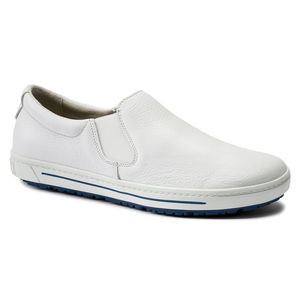
Hospital Grade Anti Slip Footwear manufacturer from Ahmedabad India offering medical footwear with superior slip resistance, easy-clean materials and orthopedic comfort technology.
Shipping Information
Exporter details revealed after verified importer registration
Hospital grade anti-slip footwear is occupational safety footwear engineered specifically for healthcare environments - where wet floors, chemical spills, and long shifts on hard surfaces create constant slip-and-fall risk for clinical staff. The global slip-resistant footwear market is valued at USD 1.67 billion in 2025 and is projected to reach USD 2.86 billion by 2035, growing at a 5.5% CAGR. Healthcare is one of the primary demand sectors alongside hospitality and food service. Ahmedabad-based manufacturers supply hospital procurement teams, healthcare distributors, and institutional buyers across the US, UK, UAE, and Europe with certified anti-slip footwear meeting EN ISO 20347:2021 and OSHA occupational safety standards.
| Attribute | Details / Value |
|---|---|
| Primary Use | Hospital, clinic, laboratory, OT (operation theatre) environments |
| Sole Material | EVA / PU / Rubber - SRC rated (tested on wet ceramic and steel) |
| Upper Material | PU leather / genuine leather / breathable mesh (as per order spec) |
| Slip Resistance | SRC certified - coefficient of friction ≥0.40 on wet surfaces |
| Closure Type | Slip-on clog / lace-up / velcro strap (style options available) |
| Additional Properties | Antistatic, antibacterial lining, fluid-resistant upper, lightweight |
| Insole | Cushioned, removable, arch-supported - suitable for 8-12 hour shift wear |
| Colors Available | White, black, navy blue, grey; custom hospital branding on request |
| HS Code | 6404.19 (textile upper, rubber/plastic sole) / 6402.99 (PU/rubber upper) - confirm with CHA |
| Shelf Life | 2-3 years under regular use; sole replacement available |
Slips, trips, and falls account for a significant share of occupational injuries among healthcare workers globally. Wet floors near sinks, sterilization units, and patient washrooms, combined with long hours on feet, make footwear one of the highest-impact safety interventions available to hospital procurement teams. Standard footwear fails in these environments because outsole tread patterns designed for dry surfaces lose grip completely on wet polished hospital flooring. SRC-rated soles are tested specifically for wet ceramic and steel surfaces - the two most common hospital floor types - and must meet a minimum coefficient of friction before certification.
Not all anti-slip footwear qualifies for clinical environments. Hospital grade footwear additionally needs fluid resistance on the upper (to handle blood, saline, and cleaning chemicals), an antistatic build (to protect sensitive equipment), an antibacterial lining (to manage hygiene over long shifts), and a construction that allows full sanitization between uses. Buyers sourcing for hospital supply chains - procurement managers, PPE distributors, and healthcare group purchasing organizations - should verify all four properties, not just slip resistance, when evaluating suppliers.
Gujarat is one of India's established manufacturing states for footwear, rubber goods, and personal protective equipment. Ahmedabad's industrial clusters include rubber and polymer processing, leather goods, and healthcare product manufacturing - the material supply chain for anti-slip hospital footwear sits largely within the state. Gujarat's road and rail connectivity to Mundra Port (one of India's largest container ports) and JNPT Mumbai keeps export logistics competitive and lead times predictable.
India's footwear exports reached USD 1.77 billion in 2024 with the US, UK, and Germany as the top three markets. Ahmedabad manufacturers in the occupational and protective footwear segment are accustomed to institutional procurement requirements - bulk sizing runs, hospital logo placement, color-coded department specifications, and documentation packages for import clearance in regulated markets. English-language communication, established export infrastructure, and per-pair pricing that significantly undercuts European and US domestic production make India a practical sourcing decision for healthcare group buyers.
Individual pairs in labeled shoe boxes with size and spec sheet. Bulk export in 5-ply corrugated master cartons (typically 6-12 pairs per carton). Hospital brand labeling and custom color-coded packaging available for institutional orders.
EN ISO 20347:2021 (SRC slip resistance, occupational footwear), OSHA 29 CFR 1910.136 compliant for US buyers, CE marking available for EU PPE Directive compliance, ISO 9001 manufacturing quality, BIS certification. Per-shipment test reports for slip coefficient, antistatic properties, and fluid resistance available on request.
SRA is tested on wet ceramic tile with soap solution. SRB is tested on wet steel with glycerol. SRC means the footwear passed both tests - it is the highest slip resistance classification under EN ISO 20347:2021 and the one most hospital procurement teams specify. Always request SRC, not just SRA, for clinical environments.
Yes. Custom color runs and logo placement (embossed or printed on the upper or insole) are available from 500 pairs. Many hospital groups use color coding by department - nursing, OT, housekeeping - and manufacturers can run multiple colorways in a single order with mixed sizing.
For the US, OSHA 29 CFR 1910.136 governs slip-resistant footwear in healthcare settings - suppliers should provide a compliance declaration and test report. For the EU, CE marking under the PPE Directive (EU) 2016/425 is required if sold as personal protective equipment. Your freight forwarder and customs broker can advise on import duty rates under the applicable HS code for your country.
Trial orders are accepted from 200 pairs across a standard size run (typically EU 36-46 or US 5-13). This covers a small department or ward for initial quality assessment before scaling to full institutional procurement quantities.
Production takes 20-30 days from confirmed order. Sea freight from Mundra Port to US East Coast runs 22-26 days; to Rotterdam or Felixstowe around 18-22 days. Air freight is available for urgent top-up orders but adds substantially to per-pair landed cost.
Connect with EXP01006 and thousands of verified Indian exporters on Navi Exports