
-
-
-
-
-
-
-
Automotive Textile Exporter for USA Importers
Pune, Maharashtra, India
Automotive Textile Exporter for USA Importers from Pune India manufacturing technical textile materials for vehicle interiors and automotive industries.
Shipping Information
Exporter details revealed after verified importer registration
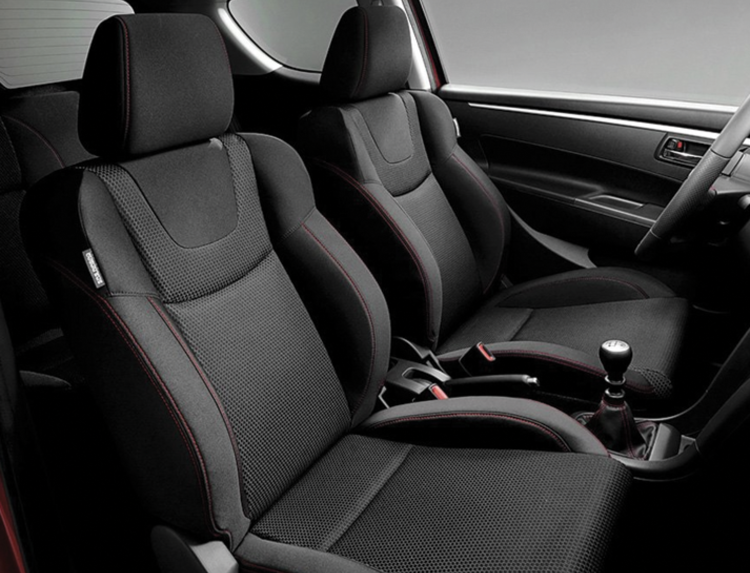
Automotive textiles are technical fabrics engineered for vehicle interior applications, seat upholstery, headliners, door panels, and NVH (noise, vibration, harshness) sound insulation, built to specific durability, flame resistance, and abrasion standards rather than general apparel fabric criteria. Pune is one of India's largest automotive manufacturing centers, home to major OEMs and a dense tier-1 and tier-2 supplier ecosystem, which has supported the development of genuine technical textile manufacturing capacity in the region. For US automotive OEMs, tier-1 interior suppliers, and aftermarket seating manufacturers, this means access to technical textile production backed by export documentation suited to US import compliance requirements.
| Attribute | Details / Value |
|---|---|
| Application Category | Seat upholstery, headliner fabric, door panel trim, NVH/acoustic insulation, specify per order |
| Fiber Composition | Polyester, nylon, PVC-coated, specify per application requirement |
| Construction | Woven, knitted, nonwoven, specify per application |
| Flame Resistance | Compliant with FMVSS 302 (US flammability standard) available, specify per destination market requirement |
| Abrasion Resistance | Rated per Martindale or Wyzenbeek test method, specify per OEM spec |
| UV/Fade Resistance | Specify per application, particularly relevant for exposed interior surfaces |
| Width | Standard automotive-grade width, specify per order |
| Packaging | Rolled fabric on cores, specify per order |
| HS Code | 5903 (textile fabrics impregnated/coated) or 5407/5512 (woven fabric of synthetic filament/fiber), confirm with CHA based on construction |
Any automotive textile destined for US vehicle interiors must meet FMVSS 302, the federal motor vehicle safety standard governing flammability of interior materials, which is non-negotiable for US market entry regardless of the fabric's other performance characteristics. Buyers should request current test reports confirming FMVSS 302 compliance for the specific fabric construction being ordered, rather than assuming general automotive-grade fabric automatically clears this standard.
Beyond flammability, individual US OEMs typically specify their own abrasion resistance thresholds (commonly tested via Martindale or Wyzenbeek methods) and durability requirements that go beyond baseline regulatory compliance. Buyers supplying a specific OEM program should confirm that program's exact testing specification rather than relying on generic "automotive-grade" claims, since requirements vary between manufacturers and vehicle segments.
Pune's position as one of India's largest automotive manufacturing hubs, home to major OEMs and an extensive tier-1 and tier-2 supplier network, has created genuine local demand and manufacturing capacity for automotive-grade technical textiles. This proximity to actual vehicle production means textile suppliers here work within the same quality and compliance culture that automotive interior components require, rather than adapting general textile manufacturing for occasional automotive orders.
Rolled fabric on standard cores, protected with poly wrapping for transit. Bulk packing in protective cartons for wholesale shipment. Custom cutting to specific lengths or roll widths available on request.
FMVSS 302 flammability compliance test reports, abrasion resistance test reports (Martindale/Wyzenbeek) available on request, Certificate of Origin, quality inspection reports available per batch.
FMVSS 302 is the US federal motor vehicle safety standard governing flammability of vehicle interior materials, and it's a mandatory compliance requirement for any automotive textile entering US vehicle interiors. Request current test reports confirming compliance for your specific fabric construction rather than assuming general automotive-grade fabric automatically meets it.
Yes, beyond baseline FMVSS 302 flammability compliance, individual OEMs typically specify their own abrasion resistance thresholds and durability requirements. Confirm the exact testing specification for your target OEM program rather than relying on generic automotive-grade claims.
Automotive textiles cover seat upholstery, headliner fabric, door panel trim, and NVH (noise, vibration, harshness) acoustic insulation material, each with distinct performance requirements around abrasion, flame resistance, and acoustic properties.
MOQ varies based on fabric construction, compliance testing requirements, and whether the order uses existing formulations or requires custom development. Confirm the current minimum for your specific requirement directly.
Classification depends on fabric construction, coated fabrics generally fall under HS code 5903, while woven synthetic fabrics fall under 5407. Confirm the exact classification with your customs broker for accurate US customs filing.
Connect with EXP01007 and thousands of verified Indian exporters on Navi Exports