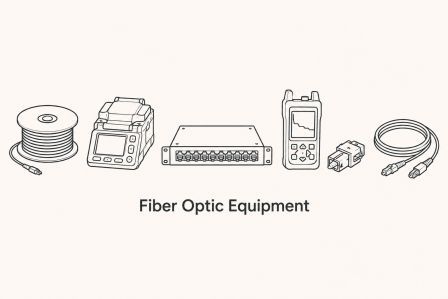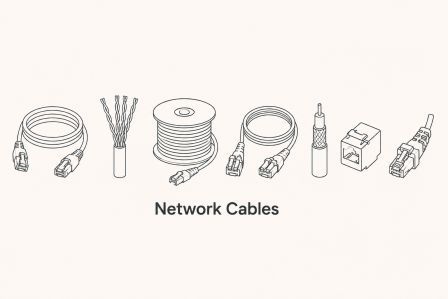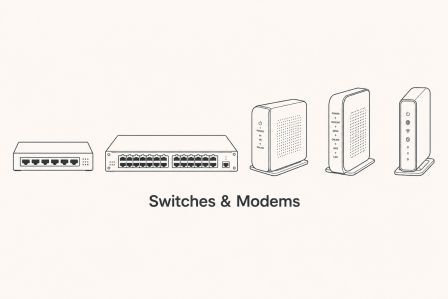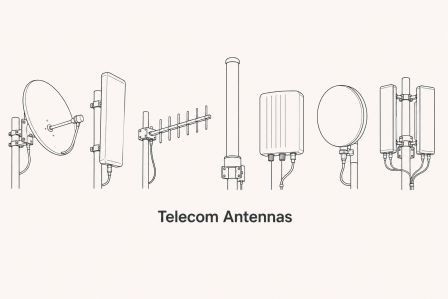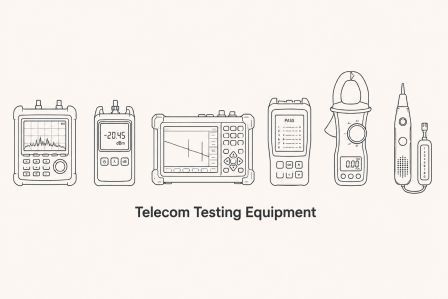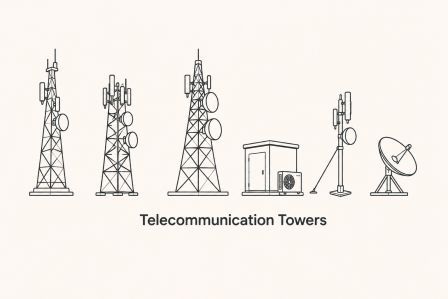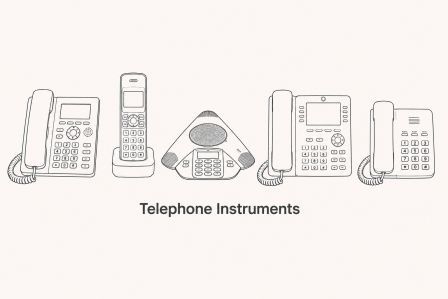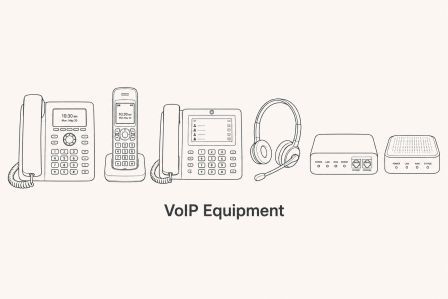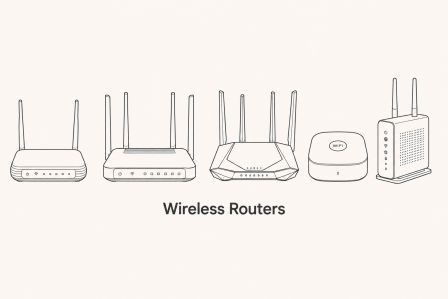
India's 4G and 5G rollout across 1.4 billion people has built a domestic telecom equipment manufacturing base that now exports at scale. Network cables, fiber optic equipment, telecom antennas, wireless routers, switches and modems, VoIP equipment, mobile signal boosters, telecom testing equipment, telecommunication towers, and telephone instruments are manufactured from facilities in Bengaluru, Pune, Hyderabad, Chennai, and Delhi NCR. The PLI scheme for telecom and networking products has pushed domestic production further - Indian manufacturers now supply telecom operators, infrastructure developers, ISPs, and enterprise buyers across Africa, Southeast Asia, South Asia, and the Middle East.
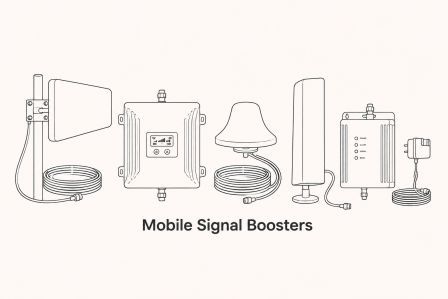
Telecommunication towers are a distinct part of this category. India has over 700,000 towers deployed nationally, and the steel tower fabrication industry behind that is now exporting to telecom operators in Africa and Southeast Asia building out their own networks. Ground-mounted towers, rooftop towers, and guyed mast structures from Indian fabricators go to network builders who need steel infrastructure at prices that keep project economics viable. Network cables and fiber optic equipment are high-volume exports to telecom infrastructure buyers. Mobile signal boosters go to buyers in markets with genuine coverage gaps - Sub-Saharan Africa, South Asian rural operators, island networks - where amplification is a practical infrastructure decision, not an optional upgrade. VoIP equipment from Indian manufacturers supplies enterprise telephony buyers and ISPs across the Middle East and Africa.
CE marking covers most telecom equipment for EU market access. FCC certification applies for the US. Beyond these, most markets require type approval from the national telecom regulator - this is separate from CE or FCC, varies by country and product, and needs to be sorted before import, not after. Mobile signal boosters need specific regulatory clearance in almost every market - some countries restrict them to licensed operator use only, so check destination-country rules before ordering. Telecom testing equipment needs calibration certification traceable to national or international standards. VoIP equipment needs compatibility confirmed with the destination telephony infrastructure before purchase. Specify frequency bands, regulatory requirements, and application context through the enquiry function - infrastructure equipment ordered to the wrong specification is a costly problem that starts at the sourcing stage.