
 Mon, 09 Feb 2026
India-US Trade Deal 2026: Strategic Analysis for Indian Exporters


A Strategic Analysis of the 2026 India-US Interim Trade Framework for Global Exporters
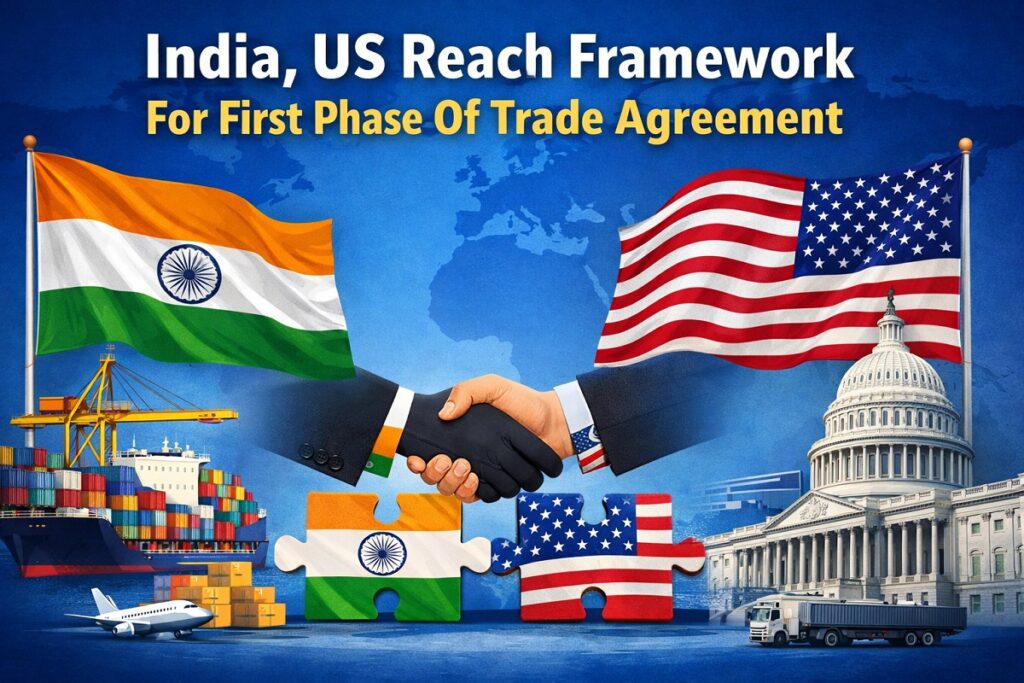
The global trade architecture experienced a seismic shift in February 2026 as India and the United States moved to finalize a historic interim trade agreement, signaling a decisive reset in bilateral economic relations. For businesses operating within the Indian export ecosystem, particularly those associated with naviexports.com, this deal represents more than just a reduction in duties; it is a structural realignment that integrates Indian manufacturing into the highest echelons of the American supply chain. After a year of escalating tensions and punitive tariff structures that saw duties on Indian goods climb as high as 50%, the move to cap reciprocal tariffs at 18% provides the stability and predictability required for long-term industrial planning.
The importance of this development cannot be overstated for sectors such as textiles, engineering, pharmaceuticals, and agricultural products. As India clinches landmark deals with both the European Union and the United States within the same week, the country is positioning itself as the primary alternative in the "China+1" sourcing strategy. This report delves into the intricate mechanics of the 2026 framework, examining how the reduction in tariffs, the strategic energy pivot, and the new focus on technological co-development will reshape the competitive landscape for Indian exporters over the next decade.
The Genesis of the Reset: From 50% Punitive Duties to Strategic Reciprocity
The road to the February 2026 announcement was paved with intense negotiations and a significant period of economic friction. In August 2025, the trade relationship hit a nadir when the United States imposed a cumulative 50% tariff on a vast array of Indian products. This was not a singular action but the result of overlapping trade policies, primarily driven by a 25% surcharge linked to India's continued purchase of Russian crude oil despite intensifying Western sanctions. This "tariff bloodbath" severely impacted labor-intensive sectors, erasing the marginal advantages of quality and dependability that Indian manufacturers had cultivated over decades.
The breakthrough occurred on February 2, 2026, when Prime Minister Narendra Modi and President Donald Trump reached an understanding that effectively dismantled these punitive barriers. By reducing the reciprocal tariff rate to 18%, the United States has not only restored India's competitiveness but has granted it a preferential status that places its duty rates lower than many of its regional peers.
| Trading Partner | Effective US Tariff Rate (Post-Deal) | Comparative Position |
|---|---|---|
| India | 18% | Leading Regional Advantage |
| Indonesia | 19% | Competitor in seafood/rubber |
| Pakistan | 19% | Competitor in textiles |
| Vietnam | 20% | Major rival in apparel/electronics |
| Bangladesh | 20% | Primary rival in readymade garments |
| China | 34% | High-tension trade environment |
This new tariff regime is more than a simple rollback; it is a strategic maneuver designed to incentivize India's shift toward the American energy and technology sectors. The immediate implementation of these rates, effective from February 7, 2026, serves to arrest the "export erosion" that had begun to hollow out Indian manufacturing hubs in Tiruppur, Agra, and Ludhiana.
Sectoral deep-dive: Analyzing the Winners of the 18% Threshold
For exporters at naviexports.com, the 18% tariff cap acts as a "reset button" for market access in the world's largest economy. The deal identifies specific labor-intensive and high-value sectors that will receive immediate relief, effectively opening a $30 trillion market to Indian MSMEs and larger industrial houses.
Textiles, Apparel, and Home Decor
The textile industry, which has historically been the backbone of India’s export economy, stands to be the most significant beneficiary of this deal. Under the previous 50% regime, Indian apparel had become nearly unviable in the US market, losing ground to duty-free or lower-tariff competitors from the ASEAN region. The reduction to 18%-which is lower than the 20% faced by Bangladesh and Vietnam-restores price parity and encourages US buyers to return to Indian suppliers for the upcoming summer season.
Exporters of home textiles, such as sheets and towels, as well as artisanal products and hand-woven carpets, now have a structural advantage. Companies that have already invested in sustainable manufacturing and ethical sourcing are particularly well-positioned, as these trends are projected to dominate the US retail market through 2026 and beyond. The deal also provides zero-duty access for certain home decor items like chandeliers and lamp parts, further diversifying the opportunities for specialized manufacturers.
Engineering Goods and the Auto Component Value Chain
The engineering sector, which represents one of India's largest export categories, has received a multi-layered boost from the 2026 framework. While many engineering products will now attract the 18% reciprocal rate, the real win for this sector lies in the relief provided under Section 232 of the US Trade Expansion Act.
India has secured a preferential tariff-rate quota for automotive components, a move that provides tangible gains for the $6.2 billion auto-part export industry. Furthermore, nearly 50% of auto parts exported from India are expected to attract zero duty under the new arrangement. This is a crucial development for the "Make in India" initiative, as it encourages global automakers to deeper integrate Indian Tier-2 and Tier-3 suppliers into their global value chains.
| Engineering Category | New Tariff Impact | Strategic Implications |
|---|---|---|
| Auto Components | Quota-based Zero Duty / 18% | Deepening integration with US OEMs |
| Aerospace Parts | Zero Duty (Section 232 Relief) | Strengthening MRO and manufacturing hubs |
| Industrial Machinery | 18% Reciprocal Rate | Regaining competitiveness against ASEAN |
| Smartphones | Zero Duty | Continued growth under PLI schemes |
Gems, Jewelry, and the Luxury Segment
The gems and jewelry sector, a major employer in states like Gujarat and Maharashtra, will transition to zero-duty access once the interim agreement is fully signed in March 2026. This move is expected to have a "multiplier effect" across allied industries such as logistics and retail design. By eliminating tariffs on cut and polished diamonds, the US is providing Indian exporters a significant edge over rivals in Belgium and the UAE. This zero-duty status also extends to fashion jewelry and precious stones, tapping into the rising luxury consumption in the United States.
The Energy Bargain: Diversification as a Strategic Imperative
The 2026 trade deal is intrinsically linked to India's commitment to re-evaluating its energy sourcing. Union Minister Piyush Goyal has stated that purchasing crude oil, LNG, and LPG from Washington is in India's own strategic interests as the country seeks to diversify its energy portfolio and ensure long-term stability. While the agreement does not explicitly mandate a total halt of Russian oil imports, the political and economic incentives are clear: the revocation of the 25% surcharge on Indian goods was directly tied to India's "intent to purchase" $500 billion worth of American products over five years.
This $500 billion figure is comprehensive, spanning energy products, aircraft, technology, and coking coal. For the Indian energy sector, this shift provides a smoother and more predictable environment for bilateral commerce, moving away from the volatile discounting models of sanctioned oil toward more stable, market-driven procurement from North America.
| Product Category | 5-Year Purchase Intent (Est.) | Strategic Rationale |
|---|---|---|
| Energy (Crude/LNG) | Significant Portion of $500B | Reducing reliance on sanctioned sources |
| Aircraft & Parts | Major Fleet Expansions | Supporting the aviation boom in India |
| Tech (GPUs/AI) | High-Value Hardware | Powering India's digital AI ecosystem |
| Coking Coal | Industrial Input | Supporting the domestic steel industry |
The implications for the broader economy are profound. By anchoring its trade relationship in high-volume energy and technology imports, India is creating a "safety net" of political alignment that protects its labor-intensive exports from future sudden tariff shocks.
Red Lines in the Sand: Protecting the Indian Agrarian Heartlock
A critical achievement of the 2026 negotiations was India's ability to secure significant export gains while keeping its "red lines" intact regarding the sensitive agricultural and dairy sectors. Agriculture and allied activities support the livelihoods of over 700 million people in India, making the sector a non-negotiable priority for trade negotiators.
The Exclusion of Dairy and Core Staples
The interim framework strikingly omits dairy products and core agricultural staples like wheat, rice, and sugar from any tariff concessions. This omission reflects the US industry's acceptance of India's firm stance, recognizing both the political sensitivity and the structural complexity of the Indian dairy market, which is dominated by small and marginal farmers.
- Dairy Protections: No relief has been granted on milk, cheese, butter, or ghee.
- Staple Safeguards: Wheat, rice, maize, and sugar remain fully protected to ensure national food security and price stability.
- GM and Meat Exclusions: No genetically modified food products or meat (poultry, beef, etc.) will be allowed under the interim concessions, preserving India's cultural and health standards.
Strategic Openings: Animal Feed and Niche Products
To balance the agreement, India has reduced or eliminated tariffs on products that it either does not produce in sufficient quantities or that serve as vital inputs for other domestic industries. The most notable of these are dried distillers' grains (DDGs) and red sorghum, which are used as high-protein animal feed. By lowering the cost of these inputs, India aims to support the growth of its poultry and animal husbandry sectors, indirectly strengthening farm-level economics and rural incomes. Additionally, India has offered phased tariff reductions on high-end items like tree nuts (almonds, walnuts) and premium spirits, catering to a growing middle-class consumer base without threatening the livelihoods of smallholder farmers.
Technology and the Digital Economy: The GPU Revolution
Beyond traditional merchandise, the 2026 framework places a heavy emphasis on the future of technology and digital trade. Both nations have agreed to significantly increase trade in high-tech products, including Graphics Processing Units (GPUs) and equipment used in data centers. This is a strategic move to power India's burgeoning AI ecosystem and align its digital infrastructure with American standards.
The commitment to address discriminatory or burdensome practices in digital trade is particularly relevant for India's IT and SaaS sectors. By setting a clear pathway for mutually beneficial digital trade rules, the agreement reduces the friction for cross-border services, cloud computing, and fintech innovations. This technological alignment also extends to:
- Semiconductors: Deepening joint cooperation in advanced manufacturing and supply chain security.
- Standards and Testing: A commitment to review the acceptance of US or international safety and licensing standards within six months, which is expected to drastically reduce the time-to-market for new technological imports.
- Export Controls: Enhanced cooperation on the enforcement of export controls for sensitive technologies, ensuring that the benefits of co-development remain within the "trusted partner" network.
Section 232 and the Legally Durable Win for Manufacturers
One of the most nuanced but vital aspects of the 2026 deal is the relief granted under Section 232 of US trade law. Unlike reciprocal tariffs, which are often subject to judicial challenges or changes in executive emergency powers, Section 232 measures are based on national security and are considered more "legally insulated".
By agreeing to remove Section 232 tariffs on certain Indian aircraft parts-linked to steel, aluminum, and copper-the US is providing a more permanent form of relief that is less susceptible to potential judicial reversals. This relief is a significant win for Indian aerospace suppliers and the burgeoning Maintenance, Repair, and Overhaul (MRO) industry. However, the framework also includes a caveat: generic pharmaceuticals remain under an ongoing Section 232 probe, meaning the final duty-free outcome for this sector is still contingent on future security findings.
Comparing the Giants: The India-EU FTA vs. The India-US Interim Deal
The week of February 2, 2026, was a watershed moment for Indian trade, as the country clinched deals with its two largest trading partners. While the India-US deal is an interim framework focused on a reciprocal 18% cap, the India-EU Free Trade Agreement is a more comprehensive, multi-chapter document that aims for deep economic integration.
| Feature | India-EU FTA (Concluded Jan 2026) | India-US Interim Deal (Feb 2026) |
|---|---|---|
| Tariff Liberalization | Over 90% of lines | Approx. 60% of export value |
| Sustainability Focus | Enforceable labor/climate rules | Strategic supply chain security |
| Agricultural Stance | Strategic access for spices/fruits | Full protection of dairy/staples |
| Services & Digital | Modern GATS-plus rules | Focus on AI hardware/Data Centers |
| Origin Rules | Self-certification standards | Robust rules to prevent third-party misuse |
The EU agreement is projected to potentially double Indian goods exports to the continent by 2032, with immediate duty elimination for labor-intensive sectors such as textiles and leather. The US deal, while less comprehensive in its initial tariff-line coverage, provides a critical "geopolitical shield" and re-anchors India in the world's most lucrative consumer market during a period of global trade volatility.
Empowering the MSME Sector: Liquidity, Compliance, and Growth
For the micro, small, and medium enterprises (MSMEs) that populate naviexports.com's network, the 2026 trade deal is a "game-changer" for competitiveness. MSMEs account for approximately 45% of India's total exports, yet they are the most vulnerable to pricing shocks and tariff hikes. The reduction from 50% to 18% provides immediate relief for these smaller players, restoring their pricing power and improving their capacity utilization.
Financial Enablers and Structural Support
To help MSMEs leverage these new opportunities, the 2026 environment includes several domestic policy supports:
- SME Growth Fund: A ₹10,000 crore fund designed to address bottlenecks in liquidity and scalability.
- Enhanced Receivables Financing: Helping smaller exporters manage cash flows while scaling up to meet the expected surge in US orders.
- Compliance Readiness: Industry experts emphasize that while tariffs are lower, the "compliance premium" is higher. MSMEs must now invest in better documentation, traceability, and sustainability standards to meet the "trusted partner" requirements of the US market.
The Job Creation Engine
The expansion of exports in labor-intensive sectors is projected to create lakhs of new jobs, particularly for women and youth in rural and semi-urban hubs. The gems and leather sectors alone could see the creation of 1.5 to 2 lakh new jobs, while the seafood sector-where the US is India's largest export destination-supports upwards of 3 million livelihoods.
Strategic Advice for Exporters: Maximizing the 2026 Opportunity
As the interim trade agreement moves toward formal signing in mid-March 2026, exporters must transition from awareness to operational readiness. To succeed in this new 18% tariff regime, businesses should focus on the following strategic pillars:
- Reassessing Supply Chains and Sourcing: The "Rules of Origin" in both the US and EU deals are designed to ensure benefits accrue only to the signatories. Businesses with complex multi-country supply chains must evaluate where their value is added to ensure they qualify for preferential rates.
- Focusing on "New India" Wellness and Fashion: US consumer demand is shifting toward premium fashion, sustainable home decor, and Ayurvedic wellness products. Exporters at naviexports.com can capitalize on this by highlighting the heritage and quality of their "Made in India" products.
- Leveraging Digital Marketplaces: With the maturation of e-commerce, platforms like Amazon US, Walmart Marketplace, and Etsy are vital for D2C and B2B wholesale. Branding and digital presence have become as important as the product itself in the 2026 SEO-first market.
- Investing in Regulatory Alignment: As India agrees to align with US and international safety standards for medical devices and ICT goods, exporters should proactively seek certifications that facilitate easier entry into the American market.
Future Outlook: Toward a Comprehensive Bilateral Trade Agreement (BTA)
The 2026 interim framework is not an endpoint but a "managed pause" and a roadmap for a broader Bilateral Trade Agreement (BTA). While the 18% tariff provides immediate relief, the ultimate goal remains a comprehensive pact that addresses remaining barriers in digital trade, services, and investment protection.
The geoeconomic alignment between New Delhi and Washington is now stronger than ever, driven by shared concerns over supply chain resilience and competition with non-market economies. For the global trading community, the message is clear: India has emerged as a reliable, lower-risk, and high-growth sourcing hub. For the team at naviexports.com and its partners, the 2026 trade deal is the starting gun for a new era of unprecedented growth and global integration.
Summary of Key Market Access Gains for Indian Exporters
| Sector | Immediate Change (Feb 2026) | Future Target (Mid-2026 BTA) |
|---|---|---|
| Textiles & Apparel | 50% to 18% | Further reduction / Quota expansions |
| Generic Pharma | Ongoing 232 Probe | Zero Duty Access |
| Gems & Diamonds | 50% to 18% | Zero Duty Access |
| Auto Parts | Quota-based Relief | Strategic Supply Chain Integration |
| Agriculture (Spices/Tea) | Zero Reciprocal Duty | Sustained Preferential Access |
| Smartphones/Electronics | Zero Duty | Co-development of AI hardware |
The 2026 India-US Trade Deal is more than a fiscal adjustment; it is a declaration of economic partnership that safeguards the interests of the Indian farmer and MSME while offering the American consumer and industry a reliable partner in the Indo-Pacific. By navigating the nuances of this agreement-from Section 232 exemptions to the energy pivot—Indian exporters can secure a dominant position in the global markets of the next decade.